10 Inspiring Software as a Service (SaaS) Examples
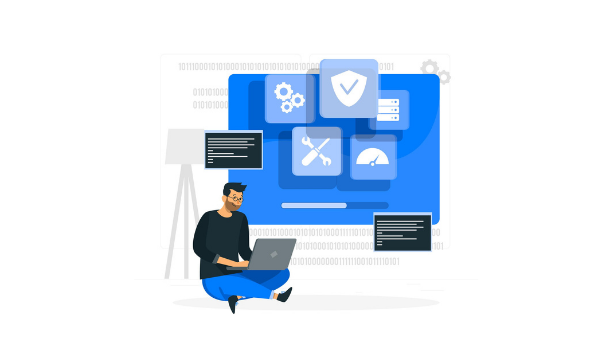
SaaS companies solve user problems with software that you do not install on your computer, but that runs in the cloud. Customers, therefore, do not purchase the software. Instead, they pay through a subscription. It is expected that the SaaS market will only grow in the coming years. But what are the largest Saas companies at the moment? In this article, I list the 10 best and most successful Software as a Service (SaaS) examples of the moment for you.
Table of Content
The Functionalities of SaaS Companies
Before we dive into the list of Software as a Service (SaaS) Examples, let’s briefly summarize: what are the functionalities that distinguish SaaS companies from other companies? Every SaaS company does things slightly differently, of course, but to be a SaaS company an organization must at least meet the following conditions:
- The application is hosted in the cloud.
- SaaS software is easily expandable through integrations with other programs or through APIs (application programming interfaces) and SDKs (software development kits).
- SaaS software is flexible and easily scalable.
- It is clear which features the customer gets at what price.
- Implementing and maintaining the software does not cause any hassle for the user.
The following Software as a Service (SaaS) Examples have arranged this so well that they have made it to the top 10 best SaaS companies.


1. Adobe
Adobe is widely recognized as a leader in design, marketing, and customer experience tools. Today, many creative professionals rely on Adobe’s software for everything from graphic design and video editing to digital marketing and content creation.
However, Adobe wasn’t always a Software-as-a-Service (SaaS) company. In its earlier days, users had to purchase a one-time license to install and use Adobe software on their computers. This traditional model remained in place for many years.
A major turning point came in 2012, when Adobe began transitioning to a SaaS model. That year, the company transformed its well-known Creative Suite into a cloud-based subscription service called Adobe Creative Cloud. This platform brought together a wide range of creative tools—giving designers, photographers, and marketers access to everything they needed through a single subscription.
Since making that shift, Adobe has continued to expand its cloud-based offerings. The move proved highly successful, and today the majority of Adobe’s annual revenue comes from its SaaS products and services. This transition not only reshaped Adobe’s business model but also helped redefine how creative software is delivered and used around the world.
2. Atlassian
Atlassian provides collaboration tools for remote teams. They offer solutions for all problems that you encounter as a company in that situation: project management, digital security, collaboration, communication, IT services, and product development. Atlassian’s services have integrations with various third-party products. You can easily find these on the Atlassian marketplace. In short: Atlassian completely unburdens companies when it comes to tools that increase the productivity. Atlassian products that you are probably familiar with include Jira, Trello, and Confluence.
3. Freshworks
Freshworks was founded in 2010 under the name Freshdesk and has experienced remarkable growth over the years. What started as a customer support solution has gradually evolved into a comprehensive suite of business software designed to help companies manage customer interactions and improve employee engagement.
Today, Freshworks provides a wide range of tools tailored especially for small and medium-sized businesses. These include solutions for human resources, IT service management, and Customer Relationship Management (CRM), along with modern tools like chatbots that help businesses automate communication and support.
Another valuable feature is the Freshworks Marketplace, where users can explore integrations with various third-party applications. This allows businesses to connect their Freshworks tools with other platforms they already use, creating a more efficient and unified workflow.
Freshworks products are available individually, giving companies the flexibility to choose only the tools they need. Pricing is also structured to suit different business sizes, with separate plans designed for small, medium, and large organizations. This flexible approach makes it easier for companies to adopt the platform and scale their tools as their business grows.
4. Google
What else can we say about Google? Google is really everywhere. Wherever you go in the world, everyone knows Google. Although Google is not Saas-only, Google’s SaaS products have grown enormously over the past few years. For example, Google recently converted its older G-suite into Google Workspace. Unlike its predecessor, Workspace has the true SaaS feel, with a collection of tools that are easy to use and integrate with each other. When it comes to SaaS, Google is best known for productivity tools. And of course: the marketing and add platform. Google’s price range is large: from free to high-end premium.
Also Read: Top 14 Best Video Conferencing Apps For Home Workers
5. Microsoft
Who doesn’t know them: Microsoft SharePoint and Microsoft Teams. These are two of the products Microsoft originally built to run in the cloud. But perhaps Microsoft is still primarily known as the company behind Windows and Office. You know: that package with Word, Excel, and Powerpoint. These classics are now also available as SaaS, under the package name Microsoft 365. The reach of Microsoft is enormous. Add to that the fact that they’ve been working for years to bring in the best experts in every field, and it’s easy to imagine Microsoft building excellent SaaS products with an endless list of integrations.
6. Salesforce
Salesforce is a SaaS-only company that also offers only one platform. That makes Salesforce a unique Software as a Service (SaaS) examples in this top 10. The company offers a comprehensive solution for everything your company’s sales team needs to ensure an optimal customer experience. The company adapts the platform to the needs of small and large companies in different sectors and charges different prices for different users. In addition, Salesforce also helps create an inclusive, competitive work environment where employees get satisfaction from their work.
7. Juice
Software giant SAP makes its software in line with the company’s goals. This makes SAP particularly suitable for large organizations. SAP is widely used for HR and procurement, but also for retailers, hotel chains, and government organizations. SAP became known worldwide with its ERP technology, but is now prominent in the world of SaaS, with a nice seventh place in this list to prove it! The company has a strong focus on its partner network. This allows them to offer their customers a long list of integrations and consultancy services in addition to their excellent software.
8. Service Now
Those looking for the perfect balance between ease of use and tailor-made solutions will come to ServiceNow. This company offers an online service that allows you to digitize your workflows: exactly the way you want and with applications for all the needs of your company. And all that white label. You build your own solution from pre-built components and can then match your User Interface with your company’s branding. This makes ServiceNow ideal for teams of developers, companies that work agile, and medium to large companies that deal with multi-layered workflows.
9. Zoho
Zoho is an all-rounder. If you had to point out Zoho’s biggest USP, it would be the sheer degree of flexibility in how you can deploy their wide range of business and productivity tools. With the services that Zoho provides, the company provides solutions to problems across the entire organization. CRM, collaboration, HR, marketing, IT service management: you name it! With the Zoho Creator, you have the option of customizing solutions yourself. Moreover, they also offer an all-in-one solution, Zoho One. Zoho One brings together more than 45 apps.
10. Zoom
The Zoom was already on the rise before the pandemic broke out, but with the massive working from home of 2020, they suddenly gained hundreds of millions of users. Zoom started out as an online video conferencing tool with a maximum of 25 participants. They still offer that service, but now they have a much broader range of communication tools. Think of chat, virtual events, calling from the cloud, webinars, and much more. Zoom focuses on individual users, teams, small and large organizations. In short: to anyone who needs a user-friendly solution for digital collaboration with unique features such as virtual background, filters, makeups, and breakout room, Zoom is for you! It distinguishes itself from competitors due to its low-threshold accessibility and scalability.