Xiaomi Mi 11 Review: Flagship with Triple Camera and Snapdragon 888

First things first: the Xiaomi Mi 11 was an all-round improvement over its predecessor, the Xiaomi Mi 10. It came with a higher-resolution screen, useful display features, faster charging, an improved macro camera and new video functions.
The Mi line was Xiaomi’s flagship series, and the Mi 11 kicked off 2021. Launched in China at the end of 2020 and worldwide in early 2021, it was one of the first phones with Qualcomm’s then-new Snapdragon 888 chip. With the Mi line, Xiaomi often moved beyond its reputation for “low price, high spec” phones, and the Mi 11 clearly played in the premium smartphone league.
The Mi 11 was also the last flagship to carry the “Mi” name: from the Xiaomi 12 onwards, the company dropped the prefix. Several years on, the Mi 11 is no longer a current model, but it’s still found on the second-hand and refurbished market. In this review, we look at its specifications and strengths, and what to keep in mind if you are considering buying one today.
Table of Content

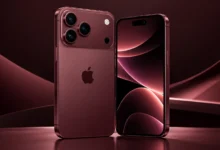


Technical data of the Xiaomi Mi 11:
So did the Xiaomi Mi 11 deserve a place among the best phones of 2021? Here are the technical facts, section by section.
Xiaomi Mi 11 Design and Display

For a flagship phone, the Xiaomi Mi 11 is surprisingly light at 196 g. Although it’s large, at 164.3 x 74.6 x 8.1 mm, it isn’t too wide, and the curved edges make it comfortable to hold.
Like its predecessor, the Mi 11 has a volume rocker and power button on the right edge, a USB-C port for charging and an infrared blaster, so you can use the phone as a remote control for your TV or air conditioner. There is no 3.5 mm headphone jack, however, so you’ll need an adapter or wireless earbuds for music. Stereo speakers tuned by Harman Kardon deliver loud, clear sound.
The stepped camera module on the back stands out from the usual rectangles and circles on most smartphones, and it doesn’t protrude as far from the body as on some other Xiaomi phones. The display is protected by Corning Gorilla Glass Victus, one of the toughest smartphone glasses available at the time.
The Xiaomi Mi 11’s display is a 6.81-inch AMOLED screen, one of the largest Xiaomi had ever used at that point. It offers a resolution of 1,440 x 3,200 pixels (WQHD+), a refresh rate of 120 Hz for smooth scrolling and support for HDR10+. It was praised for its sharpness, colour accuracy and high brightness.
The camera

The Xiaomi Mi 11 has a 108 MP main camera, a 13 MP ultra-wide camera and a 5 MP telemacro camera, plus a 20 MP selfie camera. Does that make it one of the best smartphone cameras of its generation?
The main camera produces detailed, colourful photos in good light, with plenty of resolution for cropping. The interesting extra in the triple camera is the telemacro lens, designed for close-ups of details and small objects. Unlike most macro cameras, you can hold the Mi 11 a little further away from the subject, so you don’t block the light by holding the phone right next to it. The result is sharper and better-lit close-ups.
There is no dedicated optical zoom lens, though. Zoomed shots rely on cropping from the main sensor, which works fine at 2x but loses quality beyond that. Competitors such as Samsung’s Galaxy S21 Ultra offered stronger zoom.
Xiaomi put a lot of emphasis on video. The Mi 11 can record up to 8K video and introduced several new “movie effects”, such as Magic Zoom, Time Freeze and Parallel World, along with improved audio recording and night mode for video. These creative modes made it easy to shoot eye-catching clips for social media without editing skills.
The battery

As impressive as the photo and video features are, the battery life is more sobering. The smartphone has a 4,600 mAh battery, which looks standard at first glance. But you have to take into account everything the Mi 11 powers: a large, high-resolution screen with a high refresh rate, image-enhancement features, an always-on display and live wallpapers. With heavy use, many users found they needed to charge before the end of the day. Lowering the resolution to Full HD+ or the refresh rate to 60 Hz noticeably helps.
At least charging is fast. The Mi 11 supports 55 W wired and 50 W wireless charging, as well as 10 W reverse wireless charging to top up earbuds or a smartwatch. Depending on the market, the 55 W charger was included in the box or available as an option.
Performance and software
The Xiaomi Mi 11 launched with Android 11 and Xiaomi’s own MIUI 12.5 interface, which is easy to navigate and offers many customization options. It’s powered by Qualcomm’s Snapdragon 888 chipset, paired with 8 GB or 12 GB of RAM depending on the version. At the time, this was one of the fastest chipsets in top-end Android phones.
Everyday performance and gaming were excellent. The Snapdragon 888 did have a reputation for running warm under sustained load, and the Mi 11 could get noticeably hot during long gaming sessions or 8K recording.
In terms of connectivity, the Mi 11 also played in the premium league: 5G, Wi-Fi 6, Bluetooth 5.2 and NFC for contactless payments were all on board.
The highlights of the Xiaomi Mi 11 at a glance
- 6.81-inch AMOLED display (3,200 x 1,440 pixels), 120 Hz
- Qualcomm Snapdragon 888 processor with 5G connectivity
- 8 GB or 12 GB of RAM
- 128 GB or 256 GB internal storage (no microSD slot)
- Triple camera: 108 MP main camera, 13 MP ultra-wide camera, 5 MP telemacro camera
- 20 MP front camera for selfies
- Battery: 4,600 mAh, 55 W wired charging, 50 W wireless charging, 10 W reverse wireless charging
- Stereo speakers, infrared blaster, in-display fingerprint sensor
Xiaomi Mi 11 versus the competition
In early 2021, the Mi 11 competed directly with the Samsung Galaxy S21 series, the iPhone 12 range and other Snapdragon 888 phones such as the OnePlus 9 Pro. Compared with these rivals, it stood out in several ways:
- Display: the WQHD+ 120 Hz screen was sharper than the Full HD+ panel on the standard Galaxy S21 and comparable to much more expensive models.
- Charging: 55 W wired and 50 W wireless charging were far faster than what Apple and Samsung offered at the time.
- Price: it was generally cheaper than the top models from Apple and Samsung with similar specifications.
Where it fell behind was in zoom photography, water resistance and battery life, and Samsung and Apple offered longer software support. For buyers who prioritized the screen, speed and charging over long-term updates, the Mi 11 was a very attractive option.
The Mi 11 family
The Mi 11 was not a single phone but the start of a whole family. Xiaomi also launched the Mi 11 Ultra, with a large camera module, a small secondary display on the back and a much stronger zoom camera; the Mi 11 Pro, mainly for the Chinese market; the more affordable Mi 11i; and the slim, lightweight Mi 11 Lite and Mi 11 Lite 5G, which became popular mid-range phones. Later in 2021, Xiaomi released the Xiaomi 11T and 11T Pro, already without the “Mi” prefix. If you’re looking at a second-hand phone, check exactly which model it is, because specifications differ considerably between them.
Tips for using the Xiaomi Mi 11
If you own a Mi 11, or are about to buy one, these settings can improve your experience:
- Battery: set the display to Full HD+ and enable the adaptive refresh rate, or use 60 Hz when you need maximum battery life. Turn off the always-on display if you don’t use it.
- Charging: use the original 55 W charger and cable for the fastest charging, and enable optimized charging to protect the battery overnight.
- Camera: try the telemacro mode for close-ups, and use the 108 MP mode only in good light when you need maximum detail. In other situations, the standard mode produces cleaner images.
- Security: install every available system and security update, and check the update status in the settings regularly.
- Privacy: review the app permissions and turn off personalized ads and recommendations in the MIUI settings if you prefer.
Strengths and weaknesses
Strengths:
- Sharp, bright 120 Hz WQHD+ display
- Fast Snapdragon 888 performance
- Detailed 108 MP main camera and a useful telemacro lens
- Very fast wired and wireless charging
- Premium design and good stereo speakers
Weaknesses:
- Average battery life with all features enabled
- No optical zoom lens
- Can run warm under heavy load
- No headphone jack or microSD slot
- No official IP rating for water and dust resistance
Is the Xiaomi Mi 11 still worth buying?
If you come across a Mi 11 second-hand or refurbished, it can still be an attractive phone for the price: the screen, performance and charging speed hold up well. Keep these points in mind, though:
- Software updates: manufacturers support phones for a limited number of years. Check whether the Mi 11 still receives security updates before you buy, as phones without them become less safe to use for banking and personal data.
- Battery health: after several years, the battery will have lost some capacity. Ask about its condition, or factor in a battery replacement.
- Condition: check the screen for burn-in or damage and make sure the cameras, speakers and fingerprint sensor work.
- Alternatives: a newer mid-range phone may offer longer software support and better battery life for a similar price.
If long-term updates matter to you, consider one of Xiaomi’s newer flagships or a recent mid-range model instead. Many manufacturers now promise several more years of Android and security updates than they did in 2021, which makes a newer phone a safer long-term investment.
Conclusion: Premium flagship with a solid price
Whether it was the very best phone of 2021 is debatable, but the Xiaomi Mi 11 was a top smartphone with a good price-to-performance ratio. Its design and technical features allowed it to keep up with flagships from Apple and Samsung, often at a lower price. At its European launch, prices started at around 749 euros for the 8/128 GB version. The main compromise was battery life. Today, it’s mainly interesting as an affordable second-hand option, as long as you check its update status and battery condition.
Frequently asked questions about the Xiaomi Mi 11
When was the Xiaomi Mi 11 released?
The Xiaomi Mi 11 was launched in China at the end of December 2020 and became available internationally in early 2021.
Which processor does the Xiaomi Mi 11 have?
It uses the Qualcomm Snapdragon 888, a flagship 5G chipset, combined with 8 GB or 12 GB of RAM.
Does the Xiaomi Mi 11 have a headphone jack?
No. You need a USB-C adapter or wireless headphones.
How fast does the Xiaomi Mi 11 charge?
It supports 55 W wired charging and 50 W wireless charging, plus 10 W reverse wireless charging for accessories. With the 55 W charger, a nearly empty battery is fully charged in well under an hour.
Is the Xiaomi Mi 11 waterproof?
The global version doesn’t have an official IP rating for water and dust resistance, so keep it away from water.
What came after the Xiaomi Mi 11?
Xiaomi dropped the “Mi” name for its next flagships, starting with the Xiaomi 12 series.
What is the difference between the Mi 11 and the Mi 11 Ultra?
The Mi 11 Ultra has a larger battery, a bigger main camera sensor, a periscope zoom camera, a small rear display and an IP68 rating. The standard Mi 11 is lighter and was cheaper.
What should I check when buying a used Xiaomi Mi 11?
Check whether it still receives security updates, the condition of the battery and screen, that all cameras, speakers and the fingerprint sensor work, and that the phone isn’t locked to a previous owner’s account.