The Impact of AI on Digital Marketing

The use of artificial intelligence in digital marketing has grown enormously over the past decade, and even faster since generative AI tools such as ChatGPT became widely available at the end of 2022. AI is now used across almost every platform to increase engagement and conversion. When we first wrote about this, the big story was GPT-3, a language model that could write surprisingly natural text. Since then, AI has moved from experiment to everyday tool. In this blog, we examine the impact of AI on digital marketing, and how AI is influencing SEO, search advertising (SEA), email marketing, data analysis and content marketing.
Table of Content
What is Artificial Intelligence?
AI is an umbrella term for a wide variety of technologies that allow computers to perform tasks that normally require human intelligence. These technologies include:
- Machine learning: a computer’s ability to learn without being explicitly programmed, through experience and exposure to new data.
- Natural language processing (NLP): tools and techniques for processing human language, including speech, text and writing.
- Deep learning: a branch of machine learning based on neural networks with many layers. Trained on large amounts of data, these networks can recognize complex patterns.
- Computer vision: the ability of a computer to understand and interpret images or video, such as recognizing faces, objects or text. From an engineering perspective, it aims to automate tasks that the human visual system can perform.
- Generative AI: models that create new content, such as text, images, audio, video and code, based on a prompt. Large language models (LLMs) such as those behind ChatGPT, Claude and Gemini are the best-known examples.
SEO
Artificial intelligence is an increasingly important part of search engine optimization. AI is used to automate and optimize parts of SEO, such as drafting product descriptions and meta tags. It also helps with finding blog topics, keyword research, clustering keywords into themes, analysing competitors and optimizing content. Many SEO tools now include AI features for exactly these tasks.
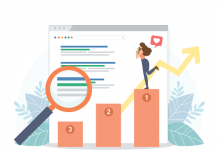

AI also has a growing influence on the search results themselves. Google has used machine learning for years to understand search queries, with systems such as RankBrain, BERT and MUM. More recently, Google introduced AI-generated summaries, known as AI Overviews, at the top of many search results, and an AI Mode for more conversational searches. Other search engines and AI assistants offer similar features.
For marketers, this changes the game. People get more answers directly in the search results or in an AI chat, which can mean fewer clicks for some types of informational searches. At the same time, being cited as a source in those AI answers is a new form of visibility. The best way to earn it is the same as for good SEO: publish clear, accurate, well-structured content that demonstrates real expertise and experience.
Voice assistants are also based on artificial intelligence, for example Siri, Alexa and Google Assistant, which is gradually being replaced by Google’s Gemini assistant. As these assistants become smarter and more conversational, optimizing for natural, spoken questions becomes more relevant.
Advertising
AI and search advertising have been intertwined for some time. Think of targeting, building the ad itself and bidding. With artificial intelligence, connections can be made very quickly between location, device, interests and the people who actually buy a product or service.
AI also helps create ads. Responsive search ads combine headlines and descriptions you provide into the best-performing versions, and platforms now offer generative AI tools that suggest headlines, descriptions and images based on your website. Google’s Performance Max campaigns use AI to show ads across Search, YouTube, Display, Gmail, Discover and Maps from a single campaign. This means more personalization, constant optimization and, ideally, a better return on investment.
Budget and bid optimization are largely handled by AI as well, through Smart Bidding strategies such as Maximize Conversions and Target ROAS. These use signals such as device, location, time of day and audience to set the right bid for every auction. On e-commerce platforms, AI is also used for dynamic pricing, adjusting prices to demand, competition and other circumstances.
The catch: AI-driven campaigns are only as good as the data you give them. Accurate conversion tracking, good product data and clear business goals are essential. Marketers remain responsible for strategy, creative direction and checking that the algorithm is optimizing for the right result.
Email Marketing
Artificial intelligence is also transforming email marketing. AI-driven tools can suggest subject lines, write parts of emails, optimize send times for each recipient and send personalized emails to every customer or prospect.
Think, for example, of the emails you receive from your favourite streaming service. Based on your viewing behaviour, an algorithm decides which films or series suit you, and when a new title you’re likely to enjoy is released, you automatically receive an email about it.
This technology uses large datasets and customer data to make predictions, recommendations and choices that are personalized at every stage of the customer journey. It can predict which customers are likely to buy again or stop buying, so you can send the right message at the right time. The result is more relevant emails and, often, higher open and click rates.
Data
The foundation of artificial intelligence is data. Large amounts of data combined with AI make it possible to estimate risks better, allocate budgets more effectively and make more accurate predictions. A constant flow of data from many different sources improves the algorithms, up to the point where AI can make very good choices and predictions that have a positive impact on marketing campaigns.
With the help of AI, data analysis can be performed very quickly, providing well-founded conclusions that take into account both the context of the campaign and the customer. Analytics platforms now include AI features that automatically detect unusual changes, predict purchase probability and answer questions about your data in plain language.
At the same time, privacy rules are becoming stricter and third-party cookies are less reliable for tracking. This makes your own first-party data, such as customer information you collect with consent, more valuable than ever. Handle it carefully and in line with privacy laws such as the GDPR.
Content marketing
The impact of artificial intelligence on content marketing has grown dramatically. AI can automate or speed up many content tasks, from brainstorming topics and creating outlines to writing drafts, summarizing long documents, translating texts and generating images. This allows marketers to spend more time on strategy, creativity and distribution.
More and more tools use AI to produce, optimize or personalize content. They can improve a mediocre text, adapt the tone of voice, generate variations for different channels and suggest content ideas.
But there are limits. AI can produce text that sounds convincing but contains errors, and content created purely with AI often sounds generic. Search engines and readers reward content that offers something original: first-hand experience, expert insight, unique data or a clear point of view. The best approach is to use AI as an assistant and let people provide the knowledge, judgement and final edit.
Social media and customer service
AI is also shaping social media. Platform algorithms decide which posts people see, based on what they are likely to engage with. Marketers use AI tools to plan and schedule posts, generate captions, analyse sentiment and spot trends early.
In customer service, AI chatbots and virtual assistants answer common questions around the clock, help customers track orders and pass complex issues on to human staff. Modern AI assistants can understand questions phrased in many different ways and find answers in a company’s own knowledge base, which makes them far more useful than the rigid chatbots of a few years ago.
How to start using AI in your marketing
Getting started with AI doesn’t require a large budget or a team of data scientists. A practical approach:
- List your repetitive tasks. Which marketing jobs take a lot of time but little creativity? Think of writing first drafts, summarizing reports, creating variations of ads or tagging customer feedback.
- Start with the tools you already have. Many email, advertising, CRM, design and analytics platforms now include AI features. Explore them before buying new software.
- Run a small pilot. Test AI on one task for a few weeks and compare the time spent and the quality with your usual approach.
- Write good prompts. Give the AI context: who your audience is, what tone you want, what the goal is and what it should avoid. The better the instructions, the better the result.
- Keep a human in the loop. Always review, fact-check and edit AI output before it goes live.
- Set guidelines. Agree as a team which tools may be used, for which tasks, and which data may never be entered.
- Measure and scale. Expand AI use where it clearly saves time or improves results, and drop it where it doesn’t.
Skills marketers need in the age of AI
AI changes not only the tools, but also the skills that make a marketer successful. Technical skills such as writing effective prompts, understanding how algorithms use data and setting up automation are increasingly valuable. But human skills matter even more than before. Strategic thinking, creativity, understanding customers’ emotions and motivations, building relationships, storytelling and critical judgement are areas where people still clearly outperform machines. Marketers who combine these strengths with a solid grasp of AI tools will be in high demand. Keep learning: experiment with new tools, follow developments in your field and share what works with your colleagues.
The risks of AI in marketing
- Accuracy: always check facts, figures and claims produced by AI.
- Brand consistency: make sure AI-generated content matches your tone of voice and values.
- Privacy: don’t enter confidential or personal data into tools unless their terms allow it.
- Bias: AI can reflect biases in its training data, so review targeting and messages critically.
- Transparency and regulation: rules on AI, such as the EU AI Act, are developing. Be open about AI use where appropriate.
AI and digital marketing
Artificial intelligence already has a major impact on digital marketing, whether marketers realize it or not. This impact will only grow in the coming years. And AI is no longer reserved for large tech companies: small and medium-sized businesses can use the same tools, often built into software they already use, to work faster and smarter.
At Outreachway, we follow these developments closely. Want to know whether AI tools can improve your marketing strategy? Please feel free to contact us; Outreachway will be happy to help.
Frequently asked questions about the impact of AI on digital marketing
How is AI used in digital marketing?
AI is used for content creation, SEO, ad targeting and bidding, email personalization, chatbots, social media management and data analysis.
How does AI affect SEO?
AI helps with keyword research and content optimization, and search engines use AI to understand queries and generate AI summaries. Clear, trustworthy and original content matters more than ever.
Will AI replace digital marketers?
AI automates many routine tasks, but strategy, creativity, customer understanding and quality control still require people. Marketers who use AI well become more productive.
Is AI-generated content allowed by Google?
Google focuses on content quality rather than how it is produced. Helpful, reliable content is fine; content created mainly to manipulate rankings is not.
What is Smart Bidding in Google Ads?
Smart Bidding is a set of automated bidding strategies that use machine learning to set bids in each auction, aiming for conversions or conversion value.
How can small businesses start using AI in marketing?
Start with the AI features in tools you already use, test AI on one repetitive task such as drafting social posts, always review the output and measure the results.
What are AI Overviews?
AI Overviews are AI-generated summaries that Google shows at the top of some search results. They answer the query directly and link to sources, which makes being a trusted, well-structured source more important for SEO.
Is AI expensive for small businesses?
Not necessarily. Many AI features are included in existing software, and stand-alone AI tools often have free or low-cost plans.