Top 10 Most Beautiful Natural Holiday Countries
Are you looking for a holiday destination full of natural highlights? A place where you can hike, spot wildlife and enjoy breathtaking viewpoints? We have listed ten of the most beautiful countries in the world for nature lovers, from deserts and glaciers to rainforests and savannas, with tips on the best time to go and how to travel responsibly.
Table of Content
What are the top 10 most beautiful natural countries in the world?
- Chile
- Botswana
- Sri Lanka
- Suriname
- South Africa
- Malaysia
- Tanzania
- New Zealand
- Costa Rica
- Canada
Below, we count down from number 10 to our favourite at number 1.
10. Chile
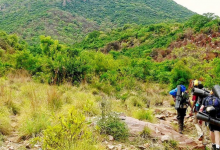
Nature in long, narrow Chile is incredibly varied, with many different climates. Saying that deserts are dry is hardly a bold statement, but few places on earth are as dry as the Atacama Desert in the north. It’s a lunar landscape of volcanoes, salt flats, dunes, geysers and beautiful red and brown mountains. Its clear skies also make it one of the best places in the world for stargazing.
Equally spectacular is the Altiplano, a high plateau in the Andes, where vicuñas and llamas graze and flamingos feed in salt lakes. Travelling south, the desert gives way to the central valleys with their famous wine regions around Santiago. Further south still lie the wet, windy and fjord-rich regions of Patagonia and Tierra del Fuego. Here you’ll find Torres del Paine National Park, with its granite towers and glaciers, while the coastal waters are home to penguins, elephant seals and whales.



Best time to visit: the southern summer (roughly November to March) for Patagonia; the Atacama can be visited year-round.
9. Botswana
Much of Botswana is covered by the sands of the Kalahari, and you won’t get very far without a robust 4×4. The Okavango Delta, sometimes called “the river that never finds the sea”, is one of the largest inland deltas in the world and a UNESCO World Heritage Site. Its waterways, explored by traditional mokoro canoe, are rich in birdlife, elephants, hippos and predators.
Moremi Game Reserve is ideal for a camping safari: in the evening, swap stories about the Big Five under a clear, starry sky by the campfire. Chobe National Park is famous for its enormous herds of elephants, while the vast Central Kalahari Game Reserve offers an even more remote adventure. Botswana focuses on low-volume, high-value tourism, so it can be expensive, but you’ll often have the wildlife almost to yourself.
Best time to visit: the dry season, roughly May to October, for the best wildlife viewing.
8. Sri Lanka
On a trip through green Sri Lanka, you’ll often find yourself visiting a spice garden. Before you know it, you’ll walk out with a bag full of spices, tea and local remedies.
You’ll want to explore, because Sri Lanka is one big fragrant mix of rich flora! Discover the tropical lowlands, the misty tea country around Nuwara Eliya and Ella, the dense jungle and the grasslands. National parks such as Yala, Udawalawe and Minneriya are excellent for spotting elephants and, with luck, leopards. Choose ethical elephant experiences, where the animals are observed in the wild or in genuine rehabilitation projects, rather than attractions that offer rides.
The palm-fringed beaches are just as attractive, with many good diving and snorkelling spots. You can also go whale watching, for example off Mirissa on the south coast and Trincomalee on the east coast.
Best time to visit: December to April for the west and south coasts; May to September for the east coast.
7. Suriname
Dive deep into the Amazon rainforest: more than 90% of Suriname is covered by forest, and the plant life is incredibly diverse. Piranhas swim in the fish-rich rivers, while the jungle is home to exotic species such as anteaters, tarantulas, sloths, howler monkeys and elusive predators like the puma and the jaguar.
There are also reptiles and amphibians such as caimans and anacondas. Sea turtles, including the giant leatherback, lay their eggs on the beaches along the coast. And you can spot the most colourful birds, such as scarlet ibises, macaws and toucans. The Central Suriname Nature Reserve is a UNESCO World Heritage Site and one of the largest protected tropical forests in the world.
Keep in mind that almost all routes in Suriname lead to and from the capital, Paramaribo, by boat or by road, and many places in the interior can only be reached by boat or small plane. Ecotourism is still developing, so it pays to travel with an experienced local guide.
Best time to visit: the drier periods, roughly February to April and August to November.
6. South Africa
There’s truth in every cliché: South Africa really is “the world in one country”. Its diversity is impossible to describe in one paragraph, and the good news is that its natural beauty is spread across the whole country.
Here you’ll find all of Africa’s well-known big game in national parks such as Kruger and in reserves such as Hluhluwe-iMfolozi. There are vast savannas, dramatic mountains and rock formations such as the Drakensberg, beautiful bays and beaches along the Garden Route, green coastlines, and of course Table Mountain above Cape Town. Along the coast, you can watch whales from the shore at Hermanus in season, and see penguins at Boulders Beach.
Best time to visit: May to September for safaris; November to March for Cape Town and the beaches.
5. Malaysia
Besides being a wonderful beach destination, Malaysia is above all a paradise for nature lovers. Although a lot of forest has made way for palm oil plantations, a large part of the country is still covered by tropical rainforest.
Visit the tea plantations and strawberry farms of the Cameron Highlands in Peninsular Malaysia. Taman Negara, which simply means “national park”, is home to one of the oldest tropical rainforests in the world, estimated at more than 100 million years old, and is known for its dizzying canopy walkway.
The pristine jungle of Borneo in East Malaysia is just as impressive, with orangutans, proboscis monkeys and Mount Kinabalu. And with islands such as Sipadan, Perhentian and Tioman, Malaysia offers some of the best diving in Southeast Asia.
Best time to visit: it depends on the coast; the west coast is generally best from December to April, the east coast from March to October.
4. Tanzania
Say Tanzania and people think of safari. Say safari and they think of the Serengeti, home to one of the greatest natural spectacles on earth: the Great Migration, when well over a million wildebeest, along with zebras and gazelles, move across the plains in search of fresh grass.
Then there’s Mount Kilimanjaro, which at 5,895 metres is the highest mountain in Africa.
And of course the Ngorongoro Crater, with its unique ecosystem. National parks, game drives and abundant wildlife: peacefully grazing herds and hunting predators on vast African savannas as far as the eye can see.
And yes, the Big Five.
Plus Zanzibar, with its powder-white beaches, coral reefs and rich underwater world.
And of course, Hakuna Matata!
Best time to visit: June to October for general safaris; the timing of the migration varies through the year, so plan with a specialist.
3. New Zealand
It’s on the other side of the world and a long journey for most travellers, but New Zealand’s great outdoors is well worth it. Natural wonders are spread across the two main islands, along with unique wildlife, including birds such as the kiwi.
The North Island offers rainforests with giant tree ferns, ancient kauri trees, vineyards, green plains and volcanic landscapes with geysers and hot springs around Rotorua and Tongariro. The South Island has mighty mountains and impressive glaciers, wild rivers, the fjords of Fiordland, rugged coastlines, idyllic lakes and beautiful beaches. Its network of Great Walks makes it one of the best hiking destinations on earth.
Best time to visit: December to March for hiking; June to August for skiing.
2. Costa Rica
Costa Rica, in Central America, is known worldwide as a pioneer of ecotourism. A large share of the country is protected in national parks and reserves, almost all of its electricity comes from renewable sources, and it has set itself ambitious goals to reduce emissions. That’s its absolute unique selling point.
You’ll find bubbling volcanoes, tropical rainforests and cloud forests, mangroves, rivers and lakes rich in fish, wooded mountains, coral reefs and idyllic beaches.
Here you’ll come face to face with sloths, coatis, monkeys, toucans, anteaters, caimans, iguanas, brightly coloured poison dart frogs and many other exotic animals on your eco-holiday in the land of “Pura Vida”. It’s not for nothing that people say Noah’s Ark must have been stranded here.
Best time to visit: the dry season, roughly December to April; the green season brings fewer visitors and lush landscapes.
1. Canada
Our number 1! Vast, sparsely populated Canada, with its space and rugged nature, attracts visitors like a magnet, and it remains one of the most popular countries for emigration. If you don’t have those plans, a road trip is a great alternative. Its protected provincial and national parks, such as Banff, Jasper, Pacific Rim and Gros Morne, are full of natural beauty and wildlife, and spotting bears is the highlight for many visitors.
You can paddle across turquoise glacial lakes in the Rockies, watch whales and orcas along the coasts, see the northern lights in the Yukon and Northwest Territories, and explore endless forests in autumn colours in the east.
Best time to visit: June to September for hiking and wildlife; September to October for autumn colours; winter for snow sports and the northern lights.
How to choose your nature destination
With so much choice, how do you decide? Ask yourself a few questions:
- What do you want to see? Big game points to Botswana, Tanzania or South Africa; rainforest to Suriname, Malaysia or Costa Rica; mountains and glaciers to Chile, New Zealand or Canada.
- How active do you want to be? Some trips are about multi-day hikes, others about comfortable game drives or relaxing by the beach.
- What is your budget? Safaris in Botswana are expensive, while Sri Lanka and Malaysia can be very affordable.
- When can you travel? Check the best season for your chosen destination, as weather makes a big difference to wildlife viewing and hiking.
- How far do you want to fly? Long journeys need more holiday days to be worth it.
How to travel responsibly in nature
Nature tourism can support conservation and local communities, but only if it’s done responsibly:
- Choose responsible operators who respect wildlife, employ local guides and support conservation.
- Keep your distance from animals, never feed them, and avoid attractions that involve riding or touching wild animals.
- Stay on marked trails and follow park rules.
- Take your waste with you and avoid single-use plastic.
- Support the local economy by staying in locally owned accommodation and eating local food.
- Respect local cultures and ask permission before photographing people.
Frequently asked questions about natural holiday countries
Which country has the most beautiful nature?
It’s a matter of taste, but countries such as Canada, Costa Rica, New Zealand, Tanzania and Chile are often named among the most beautiful for their varied landscapes and wildlife.
Where can I see the Great Migration?
In the Serengeti ecosystem of Tanzania and Kenya’s Masai Mara. Its location varies through the year, so plan your trip with a specialist.
Which country is best for a safari?
Tanzania, Botswana, South Africa and Kenya are among the best. South Africa is good for first-time and self-drive safaris, while Botswana offers exclusive, remote experiences.
What is the best nature destination on a budget?
Sri Lanka and Malaysia offer rich nature, wildlife and beaches at relatively low costs compared with destinations such as Botswana or New Zealand.
How can I travel sustainably on a nature holiday?
Choose responsible tour operators, keep your distance from wildlife, stay on trails, reduce waste and support locally owned businesses.
Is Costa Rica good for wildlife?
Yes. Costa Rica is one of the best places in the world to see sloths, monkeys, toucans, frogs and turtles, thanks to its many protected areas.